

In January 2027, the entire handball world will be watching closely as Germany hosts the 2027 IHF Men’s World Championship. From 13 to 31 January, the world's top handball nations will compete for the title of world champions. But who are the favorites? Who are the star players? And which coaches will be leading the top nations? Here is an overview. Today’s focus: Germany.
Germany at the Home World Championship 2027: A superstar between the posts
Any team looking to beat Germany must first get past one man: Andreas Wolff. The THW Kiel goalkeeper is widely considered to be one of the best in the world. Time and again, he has frustrated opponents with his spectacular saves. He has been named in the All-Star Team of international tournaments four times, including three appearances in the last five competitions alone.
Alongside Wolff, team captain Johannes Golla plays a key role in head coach Alfred Gislason’s squad. The line player not only anchors Germany’s defence but is also a major attacking threat. Golla has scored 409 goals in 117 international matches. Like Wolff, he was also named to the All-Star Team at the EHF EURO 2026.
However, the central figure in Germany’s attack is someone else: 25-year-old Juri Knorr. The playmaker is the driving force in Gislason’s team, impressing with his vision and speed. Knorr is the only German player currently playing abroad, having joined Danish champions Aalborg Håndbold in summer 2025. He has also been selected multiple times for All-Star Teams at major international tournaments, most recently at the 2024 Olympic Games, where Germany won silver.
Head coach Alfred Gislason: Experience guiding a young team
In addition to Wolff, Golla and Knorr, the German team has several promising young talents. Players such as Julian Köster, Renars Uscins and goalkeeper David Späth have already become key members of the squad, while still offering significant potential for further development.
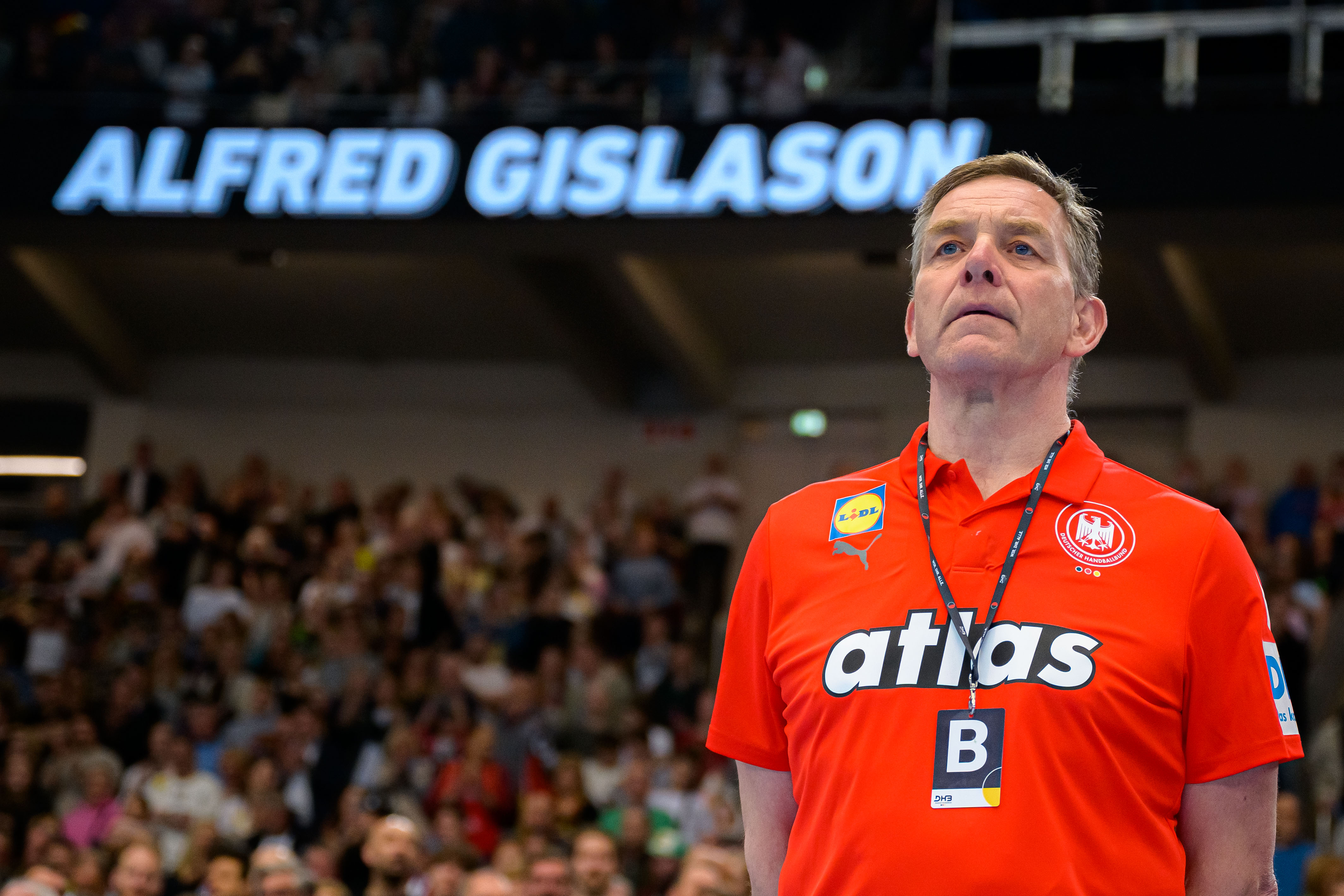
Leading this young team is an experienced coach: Alfred Gislason. The 66-year-old Icelander has seen it all. As a player, he competed at the highest level, earning 190 caps for Iceland and winning two German championships with TUSEM Essen.
Gislason then went on to enjoy a highly successful coaching career at club level. Following spells at SC Magdeburg and VfL Gummersbach, he joined THW Kiel in 2008. Considered one of the most successful club coaches of the 21st century, his impressive list of titles speaks for itself:
- 3x EHF Champions League winner
- 7x German champion
- 6x DHB Cup winner
- 5x Super Cup winner
Since becoming Germany’s head coach in 2020, Gislason has led the team to silver medals at the 2024 Paris Olympics and the EHF EURO 2026. Now, the goal is clear: to achieve ultimate success on home soil. His calmness and meticulous approach will be key.
Time for a fourth major triumph
January 2027 will mark exactly 20 years since Germany last stood on top of the podium at a World Championship. Christian Schwarzer, Pascal Hens and their teammates defeated Poland in the final to secure the gold medal. This was Germany's third world title, following earlier victories in 1938 and 1978.
The nation's record also includes silver medals in 1954 and 2003, as well as bronze in 1958.
The nation has enjoyed similar success at the European Championships:
- Gold: 2004, 2006
- Silver: 2002, 2016
- Bronze: 1998
At the Olympic Games, the world’s biggest sporting event, Germany’s last gold medal was won in Berlin in 1936. Since then, the team has won silver in 1984, 2004, and 2024, as well as bronze in 2016.
By January 2027, it will have been 11 years since Germany last won a major title: the EHF EURO 2016. The last World Championship triumph will be 20 years ago. That victory came at the very venue that will host the 2027 final: the LANXESS Arena in Cologne. Is this a good omen for Germany?
From Munich to Cologne: Germany’s road to the title
As hosts, Germany automatically qualifies for the tournament and does not need to go through qualification.
The tournament begins for the German team at the SAP Garden in Munich, where the preliminary round matches will take place on 13, 15 and 17 January.
If Germany advances to the main round, they will play in the LANXESS Arena in Cologne on 20, 22 and 24 January. This venue would also host a potential quarter-final on 26 January, as well as the final weekend from 29 to 31 January.